Face Grades in Birch Panels: From Clear to Repair-Grade
Face grade decides which birch panels end up visible and which become structure, and it is the easiest line on an order to misread. The published grades run from A-grade, described as outstanding condition with some knots and burls allowed, through B-grade with more and larger burls plus colour variation, to C-grade and a repaired-defect grade that is free of open defects but may carry repairs.

Key takeaways
- A-grade faces are published as outstanding condition with some knots and burls allowed; B-grade allows more and larger ones, plus colour variation.
- C-grade is described as smooth and sound with further variation; the repaired-defect grade is free of open defects.
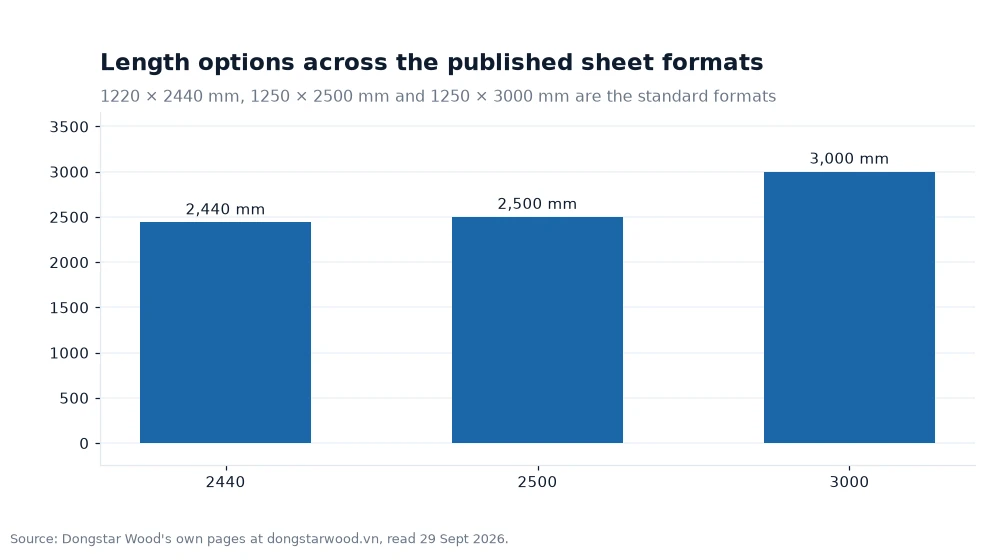
- Birch panels are published from 2.7 mm to 30 mm thick, in 1500 × 3000 mm, 1250 × 2500 mm plus 1220 × 2440 mm as standard formats, with custom sizes available.
- Compliance options listed are E1, CARB P2 and CE documentation, pressed with low-emission glue systems.
Why grade is a purchasing decision rather than a detail
Two panels can come off the same press, cut to the same size and the same thickness, and differ by a factor in price because one face is unblemished and the other carries knots, burls and tonal variation. Grade is the word that captures that difference, and the mill describes it openly rather than letting buyers discover it in a container. Any Birch Plywood Supplier can send a photograph of a good face; it is the grade list that tells you which face you are actually buying. That makes grade a purchasing decision: the standard you accept on the back of a wardrobe should not be the standard you accept on the front of it.
Reading the grade list closely also changes how an order is structured. Rather than asking for the best face everywhere, a furniture maker splits the bill of panels into visible and hidden sets, orders the appropriate grade for each, and puts the saving into the parts of the project that customers actually touch. The published descriptions are specific enough to support that split without a visit to the plant.
The four faces described on the product page
A-grade is described as outstanding condition with some knots and burls permitted — not a perfectly clear face, which matters when a specification is written to expect one. B-grade carries more and larger burls and knots, along with some colour variation. C-grade is smooth and sound, with even more variation in knots and burls. The fourth option is a repaired-defect grade: free of open defects, but panels in it may carry some repaired defects.
The surface across all of them is a birch veneer in light cream to pale brown, uniform enough to be stained, laminated or painted. That uniformity is what makes grade work: on a busy face, paint and laminate hide a great deal, while a clear finish with a stain leaves every variation on show. Choosing the finish first tells you which grade the visible panels need.
| Face grade | Published description | Where it usually belongs |
|---|---|---|
| A-grade | Outstanding condition; some knots and burls allowed | Visible faces on furniture and panelling |
| B-grade | More and larger burls and knots, with colour variation | Faces that will be laminated or painted |
| C-grade | Smooth and sound, with further variation | Internal panels and hidden structure |
| Repaired-defect grade | Free of open defects; may carry repaired defects | Utility work and non-visible components |
Construction is not part of the grade conversation
Grade describes the face, and nothing on the published list ties it to how the panel is built. That distinction matters because the engineering claims sit at panel level: a multi-layer hardwood core, resistance to warping during machining, and a build engineered for cutting, CNC machining, sanding and edge processing with minimal tear-out. A repair-grade facing still machines on the same line as an A-grade facing, because the core underneath is the same construction.
Panel stability is handled separately too. Thickness tolerance and moisture control are published as features aimed at European climates, which is the reason a birch panel can be delivered into a northern warehouse and still sit flat when it reaches the machine a month later. Neither property is a function of how many knots the face shows.
Worked example: a 2,400 m² order as 640 sheets
Ordering by grade quickly turns into arithmetic. A 1250 × 3000 mm sheet covers 1.25 × 3 = 3.75 m². An order for 2,400 m² of one grade therefore needs 2,400 ÷ 3.75 = 640 sheets. Stacked at 18 mm, those panels stand 640 × 0.018 m = 11.52 m high, which is the figure a warehouse wants before a vehicle is booked.
Now split the same 2,400 m² across two grades: 70% visible and 30% hidden. The visible share is 0.70 × 2,400 = 1,680 m², or 1,680 ÷ 3.75 = 448 sheets of A-grade. The hidden share is 720 m², or 720 ÷ 3.75 = 192 sheets of C-grade. Add the two back together — 448 + 192 = 640 sheets — and the split reconciles with the original order, which is the check that stops a grade mix from quietly inflating.
Compliance behind a birch face: CARB P2, E1 and CE
Interior panels carry a second specification behind the visual one. The published compliance options for this range are E1, CARB P2 and CE documentation, pressed with low-emission glue systems. For a furniture programme selling into North America or the EU, that trio answers the emissions and construction questions that tend to arrive with the purchase order rather than before it.
Moisture performance can be specified as well, with phenolic or melamine adhesives named as options for builds that need more resistance than a standard interior panel. Add the export packing described on the page — protective wrapping, steel strapping plus wooden pallets, with custom packaging and labelling as standard for larger projects — and the order arrives with both the paperwork and the protection it needs.
Frequently asked questions
How should a face grade be written into a purchase order?
Name the grade, then the thickness in millimetres, the sheet format and the glue class, because grade describes the face only. Where a project can accept repairs in hidden positions, say so explicitly; where a visible elevation must be free of them, say that too. A panel specification written in that order can be checked against a delivery without opening every bundle.
Does a lower face grade change how the panel machines?
No. The published engineering features — a multi-layer hardwood core, resistance to warping during machining, and a build made for cutting, CNC machining, sanding and edge processing with minimal tear-out — sit at panel level, not at face level. A C-grade panel machines on the same settings as an A-grade panel of the same thickness.
Which documents support a birch order into Europe or North America?
E1, CARB P2 and CE documentation are the published compliance options, alongside low-emission glue systems. Ask for the documents by name with the first quotation rather than at shipment, and file them with the batch record so a later delivery can be tied back to the same specification.
Two more pages worth a look
If the same project needs a pale face with different working properties, okoume-faced panels are described as lower in density and easier to handle, which suits cabinetry and interior decoration. And where the birch cut list meets carcass work in the same building, the wider commercial range sets out the thickness bands for backs, shelves and worktops in one place.
Grades, formats and compliance lines above: the maker's own website, as checked on 29 September 2026 as the basis for this briefing as the basis for this briefing as the source for this guide[1].