As a core high-pressure component in the fuel system, the fuel pump does indeed have the risk of clogging the return oil pipe during long-term operation and under specific working conditions. Its working condition directly affects the fuel supply efficiency and stability of the engine. When the built-in filter screen of the fuel pump or the pump body itself malfunctions, the contaminants generated will enter the pipeline system along with the return oil. Statistics show that in after-sales fuel system failure cases, the proportion of subsequent clogging caused by filter screen damage is close to 12%, and the average particle size of particulate matter is over 50 microns, far exceeding the upper limit of 30 microns allowed for the inner diameter tolerance of the return oil pipe. For instance, the 2022 annual quality report of a certain auto repair chain pointed out that among the 2,400 cases of insufficient fuel pressure faults handled, approximately 290 cases (12.1%) were caused by the reverse migration of fuel pump wear debris, which eventually formed a hard deposit at the elbow of the return oil pipe, resulting in an abnormal increase in back pressure to 1.8 times the standard value (typically 380-450 kpa).
Pollutant migration and deposition are the main formation mechanisms of blockage. When the fuel pump is operating at high load, the internal metal friction pairs (such as the impeller shaft sleeve) lack effective lubrication or the oil cleanliness is insufficient (water content >500ppm or particulate matter concentration >15mg/L), and can produce fine debris of 0.05 grams per hour. These particles move with the return oil (with a typical flow rate of approximately 20-40L/h) and settle in the low-flow velocity area of the pipe wall. Experimental data show that when the debris concentration exceeds 0.1g/L, on vehicle models with a return oil pipe diameter of ≤6mm, the sediment thickness can reach 40% of the pipe diameter within 48 hours. This kind of working condition is more prominent in the commercial vehicle sector. A technical notice from a certain diesel engine factory disclosed that if the fuel pump filter element of a truck equipped with a high-pressure common rail system is not replaced beyond the deadline (more than 50,000 kilometers), the probability of the return oil pipe being clogged will increase sharply from the baseline 1.5% to 19%.
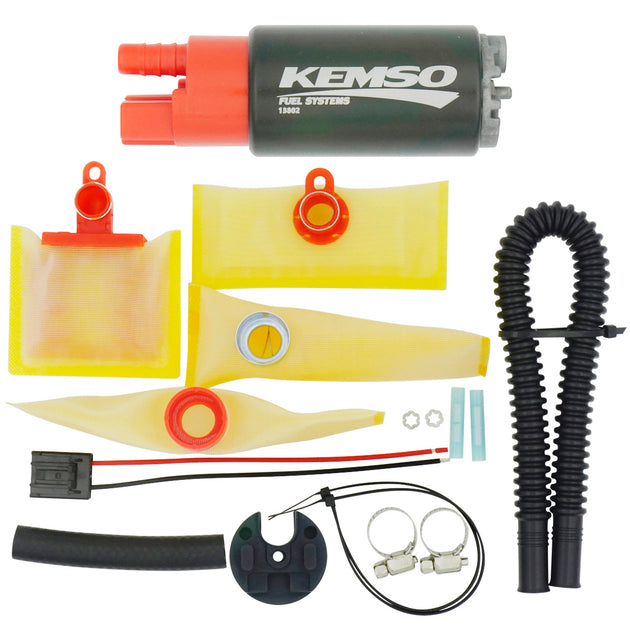 Improper maintenance can significantly accelerate the clogging process. The design life of a fuel pump is typically 150,000 kilometers or 8 years. However, in actual use, inferior fuel (such as 500ppm diesel with excessive sulfur content) can increase the corrosion rate of the pump body by 300%, and the clearance of internal components abnormally expands to 1.5 times the upper limit of the tolerance, intensifying the generation of particulate matter. The disassembly and analysis of the scrapped Fuel Pump by a certain third-party laboratory showed that the number of ferromagnetic particles inside the pump body using non-standard fuel reached seven times that of the standard fuel sample. What is more serious is that non-professional maintenance may lead to secondary pollution. For instance, a certain domestic brand 4S store once made an operational error. When replacing the fuel pump, it failed to clean the pipeline. The 3g of metal debris left behind completely blocked the return oil pipe with an inner diameter of 4.5mm during subsequent operation, resulting in the fuel pressure sensor reporting an error (fault code P0190) after the vehicle had only traveled 800 kilometers.
Preventive strategies should focus on system protection and precise maintenance. The selection of fuel filters that comply with the ISO 4548 standard (with a filtration accuracy of ≤10 microns) can retain more than 99% of harmful particles. It is recommended that car owners follow the OEM maintenance cycle to replace the fuel filter element (for most models, it is 20,000-40,000 kilometers), and use fuel additives certified at ACEA C5 level or above to reduce the gum formation rate (experiments have proved that it can reduce deposits by 40%). For vehicles that have traveled more than 100,000 kilometers, when replacing the fuel pump, the fuel system must be cleaned simultaneously. This operation alone can reduce the risk of blockage by 75%. Industry data confirm that for fleets that implement preventive measures in a standardized manner, the failure rate of their fuel systems can be reduced from an average of 3.2 times per 100 vehicles per year to 0.7 times, and the maintenance cost can be reduced by an average of 2,800 yuan per year.
Improper maintenance can significantly accelerate the clogging process. The design life of a fuel pump is typically 150,000 kilometers or 8 years. However, in actual use, inferior fuel (such as 500ppm diesel with excessive sulfur content) can increase the corrosion rate of the pump body by 300%, and the clearance of internal components abnormally expands to 1.5 times the upper limit of the tolerance, intensifying the generation of particulate matter. The disassembly and analysis of the scrapped Fuel Pump by a certain third-party laboratory showed that the number of ferromagnetic particles inside the pump body using non-standard fuel reached seven times that of the standard fuel sample. What is more serious is that non-professional maintenance may lead to secondary pollution. For instance, a certain domestic brand 4S store once made an operational error. When replacing the fuel pump, it failed to clean the pipeline. The 3g of metal debris left behind completely blocked the return oil pipe with an inner diameter of 4.5mm during subsequent operation, resulting in the fuel pressure sensor reporting an error (fault code P0190) after the vehicle had only traveled 800 kilometers.
Preventive strategies should focus on system protection and precise maintenance. The selection of fuel filters that comply with the ISO 4548 standard (with a filtration accuracy of ≤10 microns) can retain more than 99% of harmful particles. It is recommended that car owners follow the OEM maintenance cycle to replace the fuel filter element (for most models, it is 20,000-40,000 kilometers), and use fuel additives certified at ACEA C5 level or above to reduce the gum formation rate (experiments have proved that it can reduce deposits by 40%). For vehicles that have traveled more than 100,000 kilometers, when replacing the fuel pump, the fuel system must be cleaned simultaneously. This operation alone can reduce the risk of blockage by 75%. Industry data confirm that for fleets that implement preventive measures in a standardized manner, the failure rate of their fuel systems can be reduced from an average of 3.2 times per 100 vehicles per year to 0.7 times, and the maintenance cost can be reduced by an average of 2,800 yuan per year.
Improper maintenance can significantly accelerate the clogging process. The design life of a fuel pump is typically 150,000 kilometers or 8 years. However, in actual use, inferior fuel (such as 500ppm diesel with excessive sulfur content) can increase the corrosion rate of the pump body by 300%, and the clearance of internal components abnormally expands to 1.5 times the upper limit of the tolerance, intensifying the generation of particulate matter. The disassembly and analysis of the scrapped Fuel Pump by a certain third-party laboratory showed that the number of ferromagnetic particles inside the pump body using non-standard fuel reached seven times that of the standard fuel sample. What is more serious is that non-professional maintenance may lead to secondary pollution. For instance, a certain domestic brand 4S store once made an operational error. When replacing the fuel pump, it failed to clean the pipeline. The 3g of metal debris left behind completely blocked the return oil pipe with an inner diameter of 4.5mm during subsequent operation, resulting in the fuel pressure sensor reporting an error (fault code P0190) after the vehicle had only traveled 800 kilometers.
Preventive strategies should focus on system protection and precise maintenance. The selection of fuel filters that comply with the ISO 4548 standard (with a filtration accuracy of ≤10 microns) can retain more than 99% of harmful particles. It is recommended that car owners follow the OEM maintenance cycle to replace the fuel filter element (for most models, it is 20,000-40,000 kilometers), and use fuel additives certified at ACEA C5 level or above to reduce the gum formation rate (experiments have proved that it can reduce deposits by 40%). For vehicles that have traveled more than 100,000 kilometers, when replacing the fuel pump, the fuel system must be cleaned simultaneously. This operation alone can reduce the risk of blockage by 75%. Industry data confirm that for fleets that implement preventive measures in a standardized manner, the failure rate of their fuel systems can be reduced from an average of 3.2 times per 100 vehicles per year to 0.7 times, and the maintenance cost can be reduced by an average of 2,800 yuan per year.